
A Frustrating Problem With a Logical Explanation
You press the button on your garage door remote, the door starts its descent, and then — just before it reaches the floor — it reverses and goes right back up. You try again. Same result. Maybe it stops at a different point each time, or maybe it consistently reverses at the exact same spot. Either way, your garage door refuses to close, and you're left wondering what went wrong.
This is one of the most common garage door complaints we hear from homeowners in Martinsburg, and the good news is that it usually comes down to a handful of identifiable causes. Some are easy fixes you can handle yourself, while others require a trained technician. Let's walk through what's happening and how to get your door working properly again.
Understanding Why Your Garage Door Reverses
Modern garage door openers are equipped with safety mechanisms designed to prevent the door from closing on a person, pet, or object. These systems are required by federal law and have prevented countless injuries since they became standard in the early 1990s. When your door reverses unexpectedly, it's almost always because one of these safety systems has been triggered — even when nothing is actually in the way.
Here are the most common reasons your garage door reverses before closing completely.
1. Misaligned Safety Sensors
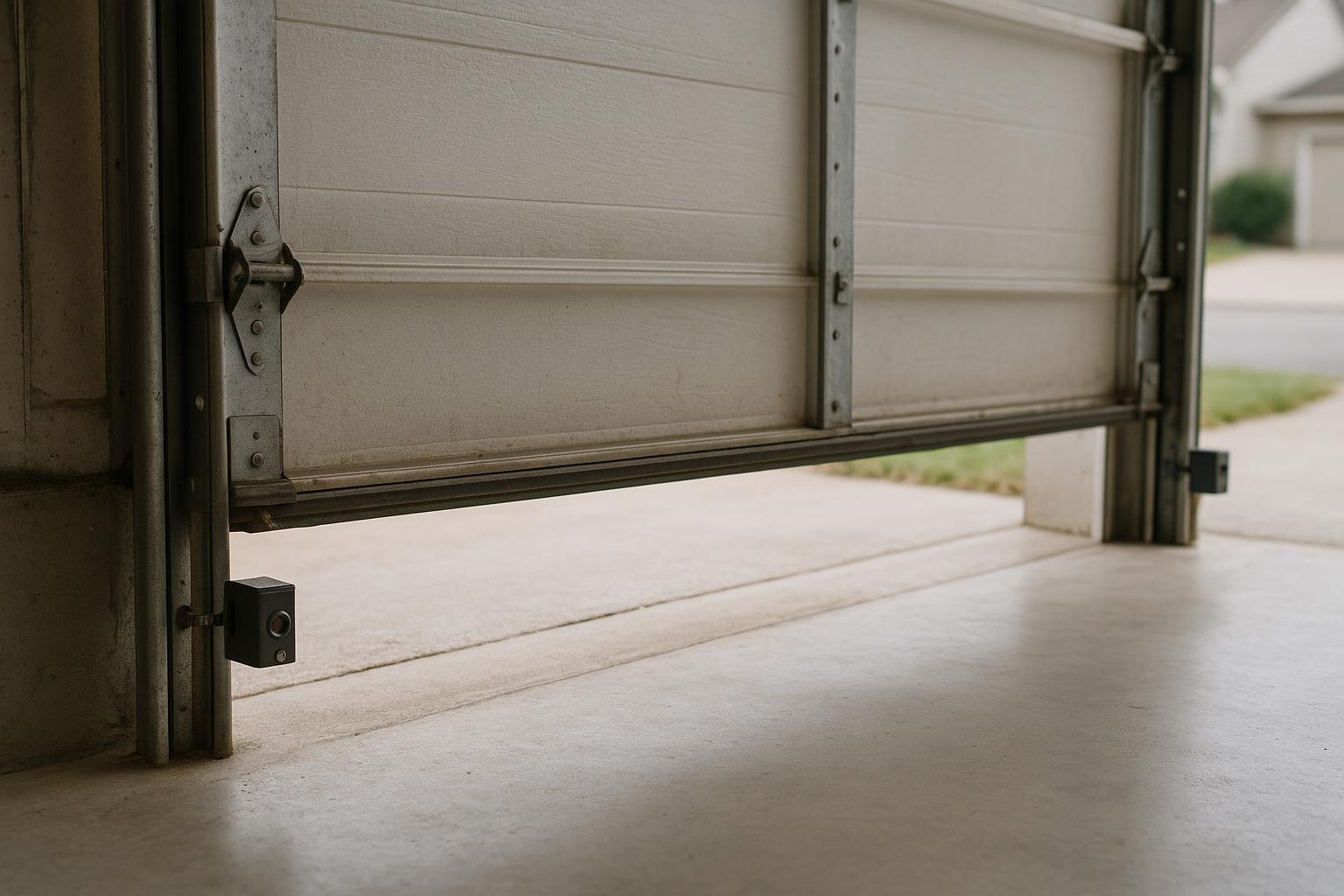
This is the number one cause of a garage door that won't stay closed. Every garage door opener manufactured after 1993 has two photoelectric sensors mounted near the bottom of the door tracks, one on each side. These sensors send an invisible beam of light between them. If anything breaks that beam while the door is closing, the opener reverses the door immediately.
Over time, these sensors can get bumped, shifted, or knocked out of alignment by a stray bike tire, a lawn mower, or even vibrations from the door itself. When the sensors are misaligned, the opener thinks something is blocking the door's path and reverses as a precaution.
What to check:
- Look at the LED indicator lights on each sensor. Most sensors show a steady green light when properly aligned and a blinking light when they're not.
- Gently adjust the sensors until both lights are steady.
- Make sure nothing is blocking the beam — cobwebs, dirt, and leaves are common culprits in our area, especially during fall.
- Clean the sensor lenses with a soft cloth.
2. Incorrect Close-Limit Settings
Your garage door opener has limit settings that tell it exactly how far the door should travel before it's considered fully open or fully closed. If the close-limit setting is off, the opener may think the door has hit an obstruction when it's actually just reaching the floor. The opener interprets this resistance as a safety issue and reverses the door.
What to check:
- Consult your opener's manual for instructions on adjusting the down-limit switch or setting.
- Most openers have a small screw or dial that controls this. Small adjustments — usually a quarter turn at a time — can make a big difference.
- If you're unsure about making this adjustment, it's best to call a professional. Setting the limit too aggressively can create a genuine safety hazard.
3. Worn or Damaged Rollers and Tracks
When rollers wear out or tracks become bent, the door encounters extra friction as it moves. The opener's force sensor may interpret that friction as an obstruction and reverse the door. This is especially common in older garage doors that haven't had regular maintenance.
Martinsburg homeowners who've had their garage doors for ten years or more without servicing are particularly likely to run into this issue. Our climate — with its humid summers and cold winters — takes a toll on metal components over time.
What to check:
- Visually inspect the tracks for dents, bends, or debris.
- Look at the rollers to see if they appear cracked, chipped, or worn flat.
- Listen for grinding or scraping sounds when the door moves, which indicate excessive friction.
4. Broken or Weakening Springs
Your garage door springs do the heavy lifting — literally. They counterbalance the weight of the door so the opener doesn't have to work as hard. When a spring weakens or breaks, the door becomes significantly heavier for the opener to manage. The opener may struggle to control the door's descent, detect too much resistance, and reverse.
Important: Garage door springs are under extreme tension and can cause serious injury if handled improperly. If you suspect a spring issue, do not attempt to repair or adjust it yourself. This is a job for a qualified technician with the right tools and training.
5. Force Setting Needs Adjustment
Separate from the limit setting, your opener also has a force setting that determines how much resistance the motor will push through before reversing. If this setting is too sensitive, the door may reverse from normal friction. If it's set too high, the door could push through actual obstructions, which is dangerous.
What to check:
- Your opener manual will show you where the force adjustment controls are located.
- Make very small adjustments and test the door after each change.
- Always perform a safety reversal test after adjusting force settings — place a 2x4 flat on the ground where the door meets the floor and close the door. It should reverse upon contacting the board.
6. Wiring Issues or Opener Malfunction
In some cases, the problem isn't mechanical at all. Frayed wiring between the sensors and the opener, a failing circuit board, or electrical interference can all cause erratic behavior, including unexpected reversals. If you've checked everything else and the problem persists, the opener's internal components may need professional diagnosis.
When to Call a Professional
If you've cleaned your sensors, checked the alignment, and made minor adjustments without success, it's time to bring in someone who can diagnose the issue properly. Some problems — like broken springs, damaged tracks, or failing openers — require specialized tools and experience to fix safely.
At Martinsburg Garage Door, we see reversal issues on a weekly basis and can usually identify the cause within minutes of arriving at your home. Whether you're in Martinsburg, Charles Town, Shepherdstown, or anywhere across the Eastern Panhandle, we'll get your door closing properly and make sure all safety systems are functioning as they should.
Prevention Goes a Long Way
Most garage door reversal problems can be prevented with basic annual maintenance. A quick inspection of your sensors, rollers, tracks, and springs once or twice a year can catch small issues before they turn into frustrating malfunctions. Lubricating moving parts, tightening hardware, and testing the safety reversal system takes less than thirty minutes and can save you from being stuck with a door that won't close on a cold January evening in Martinsburg.
If it's been a while since your garage door had a checkup, or if you're dealing with a stubborn reversal problem right now, give us a call. We'll take a look, explain what we find, and get things working the way they should.