
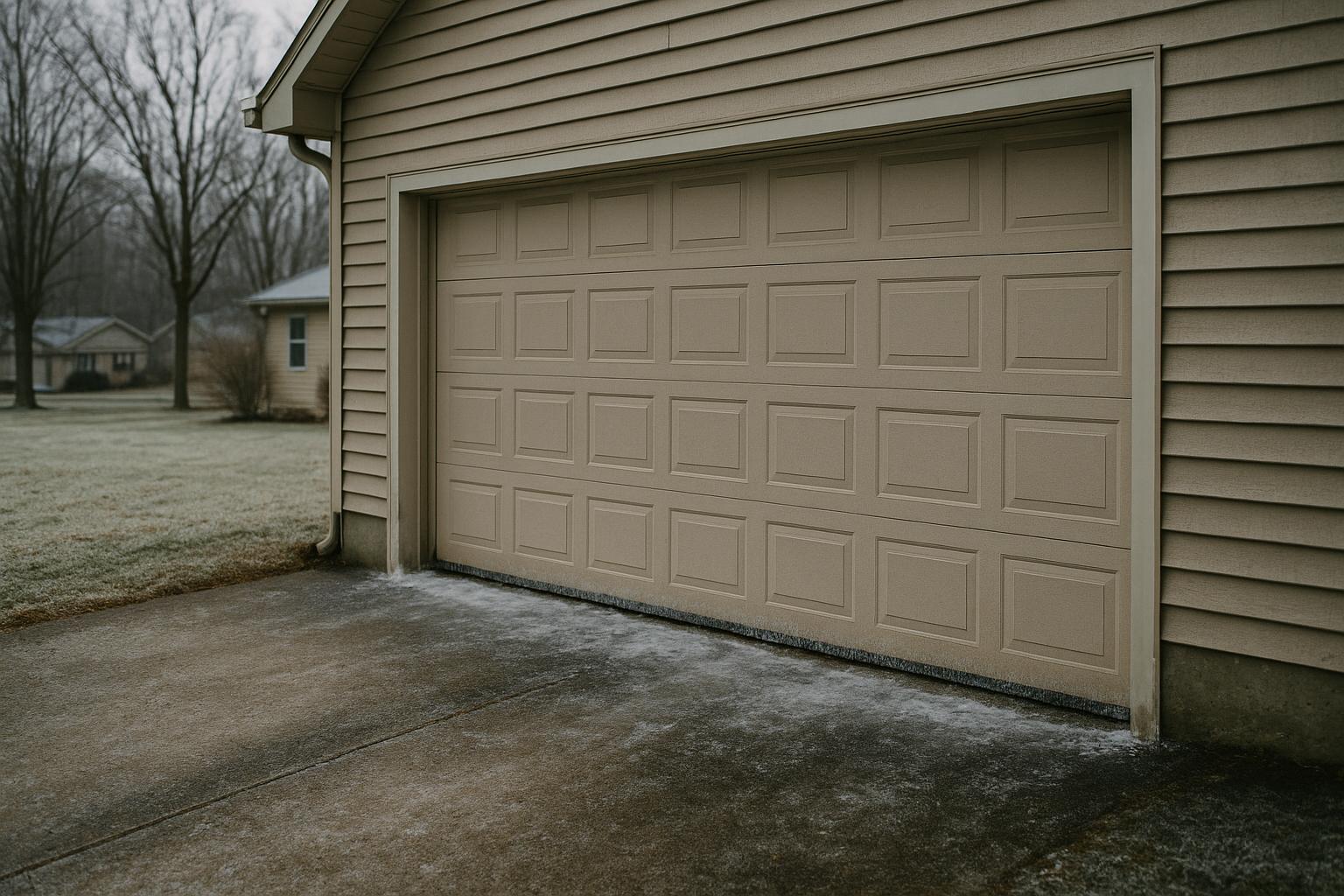
Winter Weather and Your Garage Door: A Common Problem in Martinsburg
If you've ever walked out on a freezing January morning in Martinsburg only to find that your garage door refuses to budge, you're not alone. Cold weather is one of the most common causes of garage door malfunctions, and it can happen to any door regardless of age or brand.
Temperatures in the Eastern Panhandle of West Virginia can drop well below freezing during winter months, and that kind of cold puts serious stress on your garage door system. From frozen weatherstripping to contracted metal components, there are several reasons your door might refuse to cooperate when the mercury drops.
Let's walk through the most common cold-weather garage door problems, what you can do about them, and when it's time to call a professional.
Why Cold Weather Affects Your Garage Door
Your garage door is made up of dozens of mechanical and electrical components, and many of them are sensitive to temperature changes. Here's what happens when it gets cold:
- Metal contracts: Springs, tracks, and hinges are all made of metal. When temperatures drop, metal contracts slightly, which can change the tension and alignment of your entire door system.
- Lubricant thickens: The grease and oil that keep your door running smoothly can thicken or harden in cold weather, creating more friction and resistance.
- Weatherstripping freezes: The rubber seal along the bottom of your garage door can freeze to the concrete floor, essentially gluing your door in place.
- Opener struggles: Garage door openers have to work harder in cold conditions, and older units may not have enough power to overcome the added resistance.
Frozen Weatherstripping: The Most Common Culprit
This is the number one reason garage doors won't open in winter. When snow melts near the base of your garage door and then refreezes overnight, the rubber weatherstripping along the bottom of the door can bond directly to the ground.
If you try to force the door open with your opener, you risk tearing the weatherstripping off entirely or even damaging the opener motor. Here's what to do instead:
- Never force it. If you hit the button and hear the opener straining but the door isn't moving, stop immediately.
- Break the seal gently. Use a flat shovel or a putty knife to carefully chip away the ice along the bottom edge of the door. Work from one side to the other.
- Apply heat carefully. A hair dryer or heat gun on a low setting can help melt the ice bond. Avoid using boiling water, as it will refreeze quickly and make the problem worse.
- Try opening manually. Disengage the opener by pulling the emergency release cord, then try lifting the door by hand. Sometimes a gentle push is all it takes once the ice is loosened.
How to Prevent Freezing in the Future
To keep your weatherstripping from freezing to the ground, apply a thin layer of silicone-based lubricant or cooking spray along the bottom seal before cold weather arrives. You can also salt the area directly in front of the door to prevent ice from forming. Keeping the area clear of standing water and snow is the simplest preventive step you can take.
Hardened Lubricant and Stiff Components
If your garage door opens but moves slowly, jerks, or sounds strained, the cold may have thickened the lubricant on your springs, rollers, and hinges. Standard grease can become almost solid in freezing temperatures.
The fix is straightforward: apply a silicone-based garage door lubricant to all moving parts, including the springs, roller bearings, hinges, and tracks. Silicone-based products are designed to perform in a wide range of temperatures and won't gum up like petroleum-based alternatives.
If you're in Martinsburg or nearby areas like Shepherdstown, Hedgesville, or Charles Town, and you're not sure which lubricant to use or how to apply it safely, our team can handle a full maintenance visit to get everything running smoothly again.
Garage Door Springs Under Cold-Weather Stress
Your garage door springs are under enormous tension every single day. In cold weather, the metal contracts and becomes more brittle, which increases the risk of a spring snapping. If your door feels unusually heavy when you try to lift it manually, or if it opens only a few inches before stopping, you may have a spring that's lost tension or is close to breaking.
This is not a DIY repair. Garage door springs store enough energy to cause serious injury. If you suspect a spring issue, keep the door closed and call a professional. Attempting to adjust or replace springs without the proper tools and training is one of the most dangerous home repair mistakes you can make.
Your Garage Door Opener May Need Attention
Older garage door openers can struggle in cold weather for a few reasons:
- Reduced power output: Some older motors lose efficiency in low temperatures and may not generate enough force to lift the door.
- Sensitivity settings: Most modern openers have force and travel limit settings. If the door encounters any extra resistance from cold-related friction, the opener may interpret it as an obstruction and stop or reverse.
- Dead batteries in remotes: Cold weather drains batteries faster. If your remote isn't working, try replacing the battery before assuming the opener is broken.
If your opener is more than 10 to 15 years old and consistently struggles in winter, it may be time to consider upgrading to a newer model with a stronger motor and better cold-weather performance.
When to Schedule Professional Maintenance
The best way to avoid cold-weather garage door problems is to schedule a maintenance visit before winter hits. A professional tune-up typically includes:
- Inspecting and lubricating all moving parts
- Checking spring tension and balance
- Tightening hardware
- Testing safety features and auto-reverse
- Inspecting weatherstripping and seals
- Evaluating opener performance
Think of it like winterizing your car. A little preventive care in the fall can save you from being stuck in your driveway on the coldest morning of the year.
Don't Get Stuck This Winter
Cold weather garage door problems are frustrating, but most of them are preventable with the right maintenance. If your door is already giving you trouble, or if you want to get ahead of winter before it arrives, Martinsburg Garage Door is here to help. We serve homeowners throughout Martinsburg, Ranson, Inwood, and the entire Eastern Panhandle with fast, reliable garage door repair and maintenance.
Give us a call to schedule a winter maintenance visit or to get help with a door that's already frozen, stuck, or struggling. We'll show up on time and get your door working the way it should — no matter what the temperature is outside.