
Your Garage Door Springs Are Doing More Work Than You Think
Every time you open and close your garage door, the springs are doing the heavy lifting — literally. A standard two-car garage door can weigh anywhere from 150 to 300 pounds, and it's the springs that counterbalance all that weight so your opener doesn't have to muscle the door up on its own. Without functioning springs, your garage door is essentially a giant slab of metal or wood that isn't going anywhere.
For homeowners in Martinsburg and the surrounding Eastern Panhandle, the garage door is often the largest moving part of the house and one of the most frequently used entry points. That means your springs are cycling through thousands of open-and-close movements every year. So the question isn't if they'll wear out — it's when.
How Long Do Garage Door Springs Actually Last?
Most standard garage door springs are rated for approximately 10,000 cycles. One cycle equals one full open and one full close. If your household opens and closes the garage door four times a day, that adds up to roughly 1,460 cycles per year. At that rate, a standard spring will last about seven years.
However, several factors can shorten or extend that lifespan:
- Frequency of use: Families with multiple drivers or those who use the garage as a primary entrance may cycle the door six to eight times a day, cutting the spring's life down to four or five years.
- Climate and humidity: Here in the Martinsburg area, we experience a full range of seasons. Cold winters cause metal to contract and become more brittle, while humid summers can accelerate rust and corrosion on uncoated springs.
- Maintenance habits: Springs that are regularly lubricated and inspected tend to outlast neglected ones by a significant margin.
- Spring quality: Not all springs are created equal. Higher-cycle springs rated for 20,000 or even 25,000 cycles are available and can be a smart investment if you want to avoid frequent replacements.
Two Types of Springs and Why It Matters
There are two main types of garage door springs, and knowing which kind you have helps you understand what to watch for.
Torsion Springs
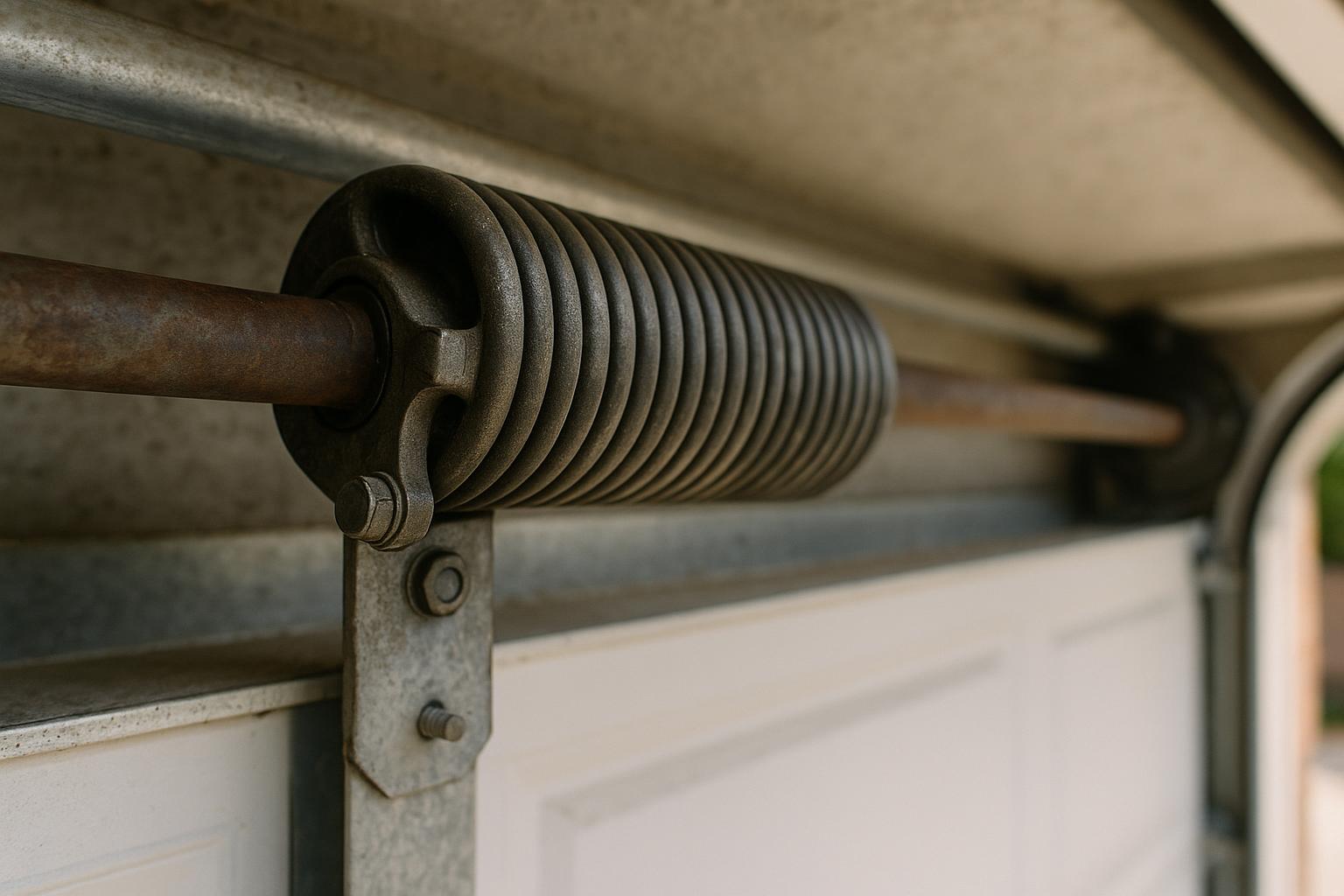
Torsion springs are mounted on a metal shaft directly above the garage door opening. They twist and unwind to raise and lower the door. Most modern garage doors in Martinsburg and Charles Town use torsion springs because they provide smoother, more controlled movement and tend to last longer than the alternative.
Extension Springs
Extension springs run along the horizontal tracks on either side of the door. They stretch and contract to move the door. These are more common on older installations and lighter single-car doors. Extension springs are generally less expensive but wear out faster and can be more dangerous when they break if they don't have safety cables installed.
Regardless of which type you have, both will eventually fail. The key is catching the warning signs before a full break leaves you stuck.
Warning Signs Your Springs Are Wearing Out
Springs rarely fail without giving you some advance notice. Here are the most common signs that your garage door springs are nearing the end of their life:
- The door feels heavier than usual: If you disconnect the opener and try to lift the door manually, a properly balanced door should stay in place about three to four feet off the ground. If it slams down or feels extremely heavy, the springs are losing tension.
- The door opens unevenly: If one side of the door rises faster than the other, one spring may be weaker or close to breaking.
- Visible gaps in the spring coils: A torsion spring that's about to break will often show a visible gap or separation in the coils. This is a clear sign that replacement is imminent.
- Loud bang from the garage: If you hear a loud bang — almost like a gunshot — coming from your garage when nobody is in there, a spring has likely already snapped. The stored energy releases all at once, creating that startling noise.
- The opener struggles or stops working: Your garage door opener is designed to work with the springs, not to replace them. If the opener is straining, running louder than normal, or stopping mid-cycle, weak springs could be forcing it to work overtime.
- Rust or corrosion on the coils: Rusty springs have increased friction and reduced flexibility. If you notice significant rust buildup, the spring is degrading faster than normal.
Can You Replace Garage Door Springs Yourself?
We understand the DIY instinct — plenty of homeowners in Shepherdstown, Hedgesville, and Ranson are handy and capable of tackling home repairs. But garage door springs are one job we strongly recommend leaving to a trained technician.
Here's why: torsion springs are under an enormous amount of tension. A standard torsion spring for a two-car garage door stores enough energy to cause serious injury or even death if it's mishandled. Professional technicians use specialized tools — including winding bars and clamps — and follow strict safety procedures to manage that tension safely.
Extension springs carry their own risks as well. Without proper safety cables, a broken extension spring can fly across the garage with tremendous force.
The cost of professional spring replacement is modest compared to the risk of a hospital visit. And when it's done right, you get properly matched springs, correct tension adjustment, and a door that operates smoothly and safely.
What to Expect During a Professional Spring Replacement
When you call a garage door professional for spring replacement, here's what a typical service visit looks like:
- Inspection: The technician will examine both springs (even if only one has broken), the cables, drums, and overall door balance.
- Spring removal: The old springs are carefully unwound and removed using proper tools.
- New spring installation: New springs are selected based on your door's weight, height, and track configuration. They're installed and wound to the correct tension.
- Balance testing: The door is disconnected from the opener and tested manually to ensure it's properly balanced.
- Lubrication and adjustment: All moving parts are lubricated, and the opener's force settings are checked and adjusted if needed.
The entire process usually takes about an hour, and you're left with a door that feels like new.
How to Make Your Springs Last Longer
You can't make springs last forever, but you can get the most out of them with some simple maintenance habits:
- Lubricate the springs twice a year with a silicone-based garage door lubricant. This reduces friction and helps prevent rust.
- Schedule an annual inspection to catch wear and tear before it becomes a bigger problem.
- Keep the tracks and rollers clean so the door moves freely and doesn't put extra strain on the springs.
- Consider upgrading to high-cycle springs during your next replacement. They cost a bit more upfront but can last two to three times longer than standard springs.
Don't Wait for a Break to Take Action
A broken garage door spring is more than an inconvenience — it can leave your car trapped in the garage, compromise your home's security, and put your family at risk if the door drops unexpectedly. If you've noticed any of the warning signs we've covered, or if your springs are more than seven years old, it's worth having them inspected.
At Martinsburg Garage Door, we handle spring replacements across Martinsburg, Inwood, Charles Town, Shepherdstown, and the entire Eastern Panhandle. We show up on time, use quality parts, and make sure your door is operating safely before we leave. If your springs are due for attention, give us a call — we'd rather help you prevent a problem than deal with an emergency.