
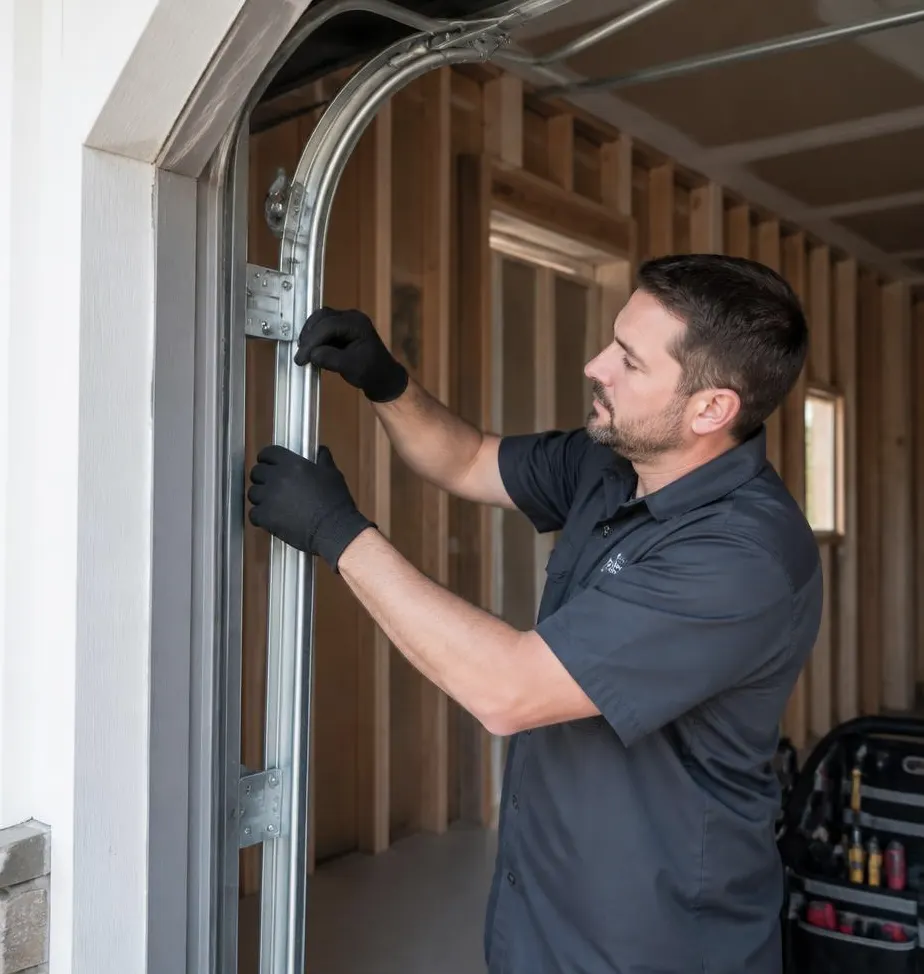
Rule of thumb: if the noise changes with the weather and happens at the same spot every single cycle, it's probably rollers; if the noise showed up suddenly and the door looks crooked or lopsided, it's probably a cable. The exceptions are worth knowing, though — a cable can fray slowly for months before it finally lets go, and a roller bearing can seize overnight and make a brand-new sound out of nowhere. So the rule gets you 80% of the way there, but you still have to look.
What Rollers Actually Do (and Why They Complain First)
Rollers are the small wheels riding in the metal track on either side of your door, and they're doing the unglamorous work every time the door moves. Plastic (nylon) rollers are quieter but wear out faster, especially once they get old and brittle. Steel rollers with sealed bearings last longer but were never quiet to begin with — they just get louder as the bearing dries out or rusts.
A worn roller usually announces itself the same way every time: a grinding or rumbling sound that gets worse right around the same point in the door's travel, often near the curve where the track bends from vertical to horizontal. You might also feel a jerk or hesitation at that spot. This is wear-and-tear noise. Annoying, but it's not an emergency — it's a maintenance item that gets worse on its own schedule.
What Cables Actually Do (and Why They're the One to Worry About)
The lift cables run from the bottom corners of the door up to the drums at either end of the torsion spring shaft. They're what's actually holding the door up and guiding it as the springs do the heavy lifting. Cables fray the way an old rope does — a few strands at a time, usually near the bottom bracket where they get the most friction and moisture exposure.
A frayed cable rarely announces itself with a dramatic bang until the very end. Before that, you'll usually see small warning signs: a visible broom-like fraying of wire strands, rust flecking off onto the floor, one side of the door sitting slightly lower than the other, or the door racking (twisting) as it moves instead of staying level. If a cable fully fails, that side of the door drops suddenly and the whole thing can come down crooked or jam hard in the track. This is the one that's actually dangerous, and it's also under the same spring tension that makes DIY spring work risky — not something to wrench on yourself.
Telling Them Apart in Your Own Garage
With the door open about halfway, take a flashlight and look at two things:
- The rollers — spin one by hand if you can reach it. Wobble, visible cracks, or a rough, gritty feel when it turns means it's on its way out.
- The cables — follow them down to the bottom bracket on each side. You're looking for broken strands sticking out, rust buildup, or slack where one cable looks looser than the other.
If the door is sitting visibly crooked right now, stop opening and closing it and skip straight to calling someone — that's a cable or spring issue, not a roller issue, and running the door risks it coming off the track entirely.
Why This Shows Up Faster Here Than in Other Climates
Eastern Panhandle weather is hard on both parts, just in different ways. Icy winters make nylon rollers brittle, and a roller that's slightly cracked in October can shatter the first time it hits a cold snap in January. Humid summers and heavy rain do the opposite job on cables — moisture gets into the strands near the bottom bracket and starts rust working from the inside out, which is exactly where fraying tends to start. Garages in older homes around the area, with less insulation and more exposure to swinging humidity, tend to see both problems a bit earlier than newer construction.
What Happens If You Ignore Either One
Ignoring worn rollers for too long eventually damages the track itself, since a wobbling roller puts uneven pressure on the rail every time it passes. That turns a cheap roller swap into a track repair. Ignoring a fraying cable is worse: when it finally snaps, the door drops unevenly, often damaging the opener, the track, or the door panel itself, and it can happen with no warning at all. One is a budget decision. The other is a safety decision.
When to Call Martinsburg Garage Door
If you've spotted fraying strands, rust buildup on the cables, or a door that's sitting crooked, don't keep cycling it — call for Garage Door Repair before it fails the rest of the way. Cables are tensioned the same way springs are, and replacing them safely means releasing that tension with the right tools, which isn't a weekend project. If it's just rollers making noise but the door is still running straight and level, that's a great candidate for a Garage Door Maintenance visit — we'll inspect the rollers, track, and hardware together, replace what's worn before it takes the track down with it, and lubricate everything so the whole system runs quieter through the winter.
Either way, settle the argument before the door settles it for you. If you're in Martinsburg, Shepherdstown, Charles Town, Ranson, Hedgesville, Inwood, Falling Waters, or Bunker Hill and something sounds or looks off, call Martinsburg Garage Door and we'll tell you straight whether it's a five-minute fix or something more.